
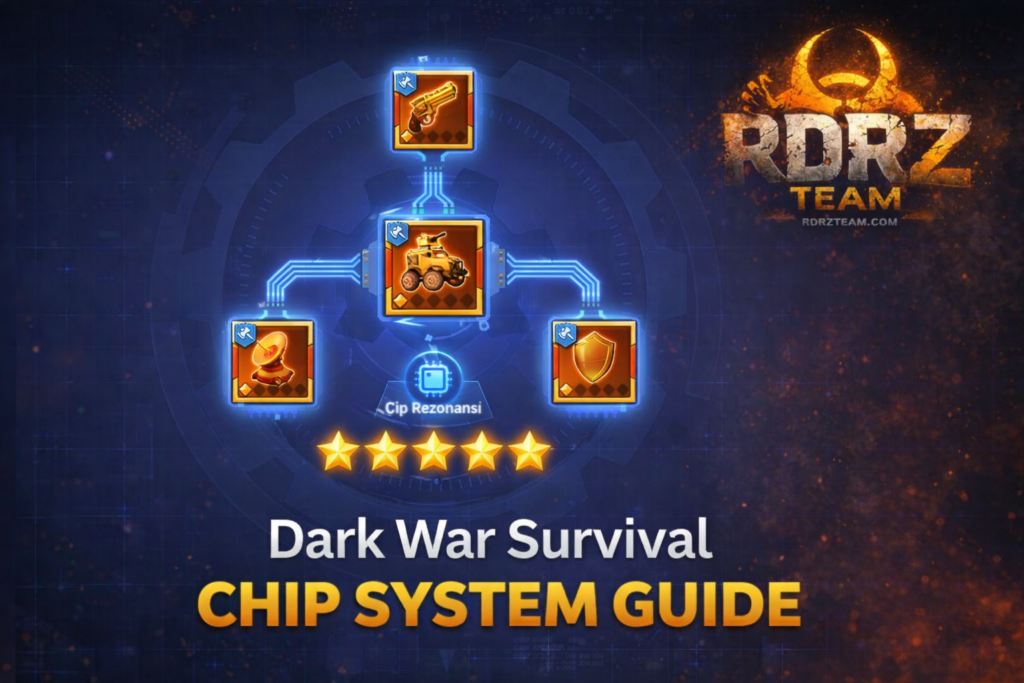
Introduction: Why Chips Are the Real Power in Dark War Survival
In Dark War: Survival, most players believe power comes from hero levels, troop tiers, gear upgrades, or total CP.
And to be fair, those things do matter.
But here’s the uncomfortable truth:
Two players with the same CP can fight — and one gets completely destroyed in seconds.
Why?
Because one of them understands the chip system, and the other one just equips whatever looks shiny.
Chips are not just another upgrade layer in Dark War Survival.
They are the hidden engine behind real combat strength.
Think of it like this:
- Heroes are the drivers
- Troops are the soldiers
- Vehicles are the tanks
- Chips are the engine that makes everything work
Without a proper chip setup, even the strongest heroes can feel like they are fighting with a broken sword.
And yes… sometimes your CP looks huge, but your chips are basically on vacation.
This guide will walk you through everything you need to know about the chip system in 2026, from beginner fundamentals to advanced PvP and rally leadership strategies.
By the end of this article, you will understand:
- How the chip system actually works
- Why resonance is more important than raw stats
- The best chip priorities for Shooter, Rider, and Fighter heroes
- How F2P players should build chips efficiently
- How whales dominate wars with orange chip skills
- And how to avoid the mistakes that quietly destroy your power
Let’s start with the most important concept.
1) Why Chips Decide Real Power (Not Just CP)
In early game, chips don’t feel that important.
You level heroes.
You upgrade troops.
You improve gear.
You increase CP.
Everything looks fine.
Then mid-game starts.
Suddenly:
- You lose fights you should win
- Rally damage feels weak
- Defense collapses faster than expected
- Enemy players with lower CP outperform you
This is where chips begin to matter.
And not just a little.
A lot.
The reason is simple:
Chips multiply your combat performance instead of just adding stats.
Most upgrades in Dark War Survival add linear power.
For example:
- More troop attack = slightly more damage
- More HP = slightly more survival
- More defense = slightly less damage taken
But chips work differently.
They combine:
- troop scaling
- combat bonuses
- resonance synergy
- faction alignment
- special skills
This creates a multiplier effect.
Instead of gaining 5% power, you might gain 20–30% real combat efficiency.
And in PvP, that difference is massive.
It’s the difference between:
Winning with low losses
or
Losing with high losses
Which one sounds better is probably obvious.
Another reason chips are powerful is consistency.
A well-built chip set provides stable performance in:
- PvP
- Kill Day
- Rally battles
- Base defense
- Alliance wars
While a random chip setup creates unstable results.
Sometimes you win.
Sometimes you lose badly.
Sometimes your march performs like a hero.
Sometimes like a confused tourist.
Consistency wins wars.
And chips create consistency.

2) Where Chips Are Used (Vehicles and APC System)
One of the most common misunderstandings in Dark War Survival is where chips actually work.
Many players think chips are connected directly to heroes.
They are not.
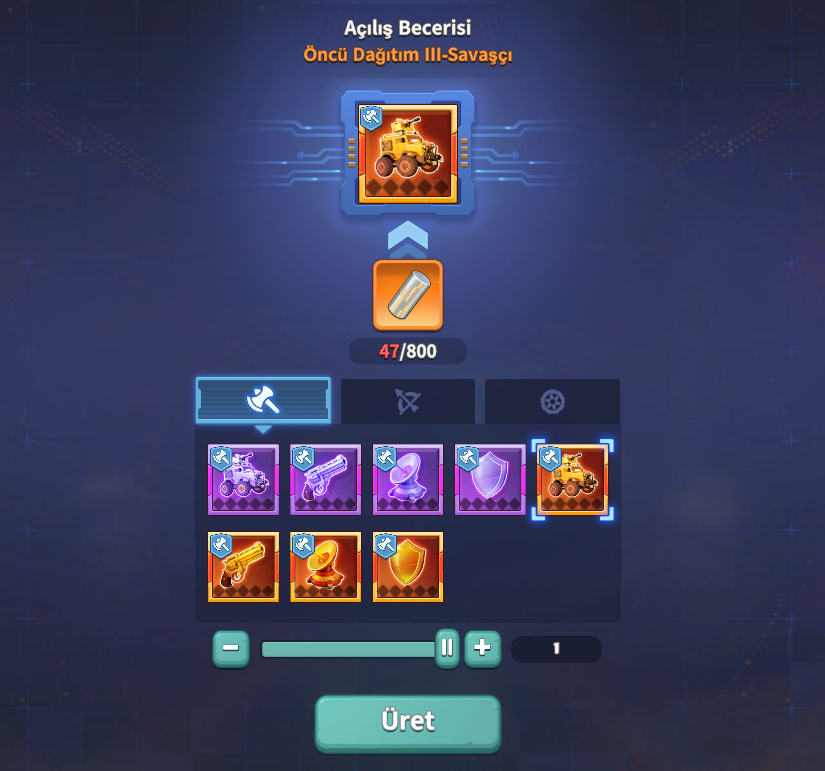
Chips are equipped on Modified Vehicles (APC / Vehicles).
This means:
Heroes fight using the vehicle’s chip setup.
So the vehicle becomes a critical part of your combat power.
Each vehicle has:
4 chip slots
And each vehicle controls a march.
This creates an important structure:
Hero → Vehicle → Chips → Combat Performance
If the vehicle is weak, the march is weak.
Even if heroes are strong.
This is why high-level players invest heavily in their main vehicle chip setup.
Because the vehicle is essentially the platform that carries the entire army into battle.
And if that platform is weak, everything collapses.
Think of it like a racing car.
You can have the best driver in the world.
But if the engine is broken, the car is not winning anything.
Same logic applies here.
Another important detail:
Each vehicle has its own chip configuration.
This means:
March 1 has its own chips
March 2 has its own chips
March 3 has its own chips
You cannot share one chip set across all marches.
So planning becomes critical.
F2P players usually focus on one main vehicle.
P2W players build multiple optimized vehicles.
Because building three perfect chip sets takes time, resources, and patience.
And sometimes a little bit of wallet power.
3) The 4 Chip Types and What Each One Really Does
Every vehicle has four chip slots.
Each slot plays a different role in combat.
Understanding these roles is essential.
Because using the wrong priority can weaken your entire setup.
Let’s break them down properly.
Deployment Chip – The Army Multiplier
Deployment chip controls troop capacity and scaling.
This is one of the most underestimated chips in the game.
Many players ignore it because it doesn’t look flashy.
But in reality, it is extremely important.
More troops means:
More damage
More survival
More pressure
More rally strength
In large-scale battles, deployment becomes even more valuable.
Because numbers matter.
A larger army survives longer and deals more total damage.
And in rallies, troop capacity directly affects overall combat performance.
Think of deployment chip as:
The size of your army.
If your army is small, even strong heroes struggle.
Because fewer troops means lower total output.
In PvP and Kill Day, deployment often decides who trades better.
And in rallies, it helps create stronger formations.
So while it may look simple, deployment is actually a key part of long-term strength.
Assault Chip – The Damage Engine
Assault chip is the offensive core.
This chip increases damage output and attack performance.
If deployment is army size, assault is firepower.
This is usually the most aggressive chip.
Shooter players love it.
Rider players depend on it.
Rally leaders prioritize it.
Because damage wins fights.
The faster you eliminate enemy troops, the less damage you take.
Which creates a snowball effect.
High assault means:
Faster kills
Stronger burst
Better PvP results
Higher rally damage
In Kill Day, assault chip becomes extremely valuable.
Because quick fights reduce losses.
And in PvP, burst damage often decides the outcome in seconds.
It is basically the “punch harder” chip.
And sometimes punching harder is exactly what you need.
Suppression Chip – The Survival Core
If Assault is about dealing damage and Deployment is about bringing more troops, then Suppression is about staying alive long enough to win the fight.
And in Dark War Survival, survival is often more important than raw damage.
Because a dead army deals zero damage.
Suppression chips increase HP, durability, and overall survivability.
They help your troops remain in battle longer, absorb more hits, and maintain combat efficiency.
This chip becomes especially powerful in longer fights such as:
- Rally battles
- Base defense
- Alliance wars
- High-level PvP
- Server conflicts
In short fights, damage might win.
In long fights, survival wins.
This is why Fighter-type marches prioritize Suppression heavily.
The longer your army survives, the more time your heroes have to activate skills and deal consistent damage.
There is also a hidden advantage here.
Longer survival increases the effectiveness of every other stat.
For example:
- More HP makes defense more valuable
- More survival increases total damage output
- More durability improves rally stability
So Suppression is not just a defensive stat.
It multiplies the effectiveness of your entire combat system.
Think of it like armor in a battlefield.
A soldier with armor survives longer and keeps fighting.
A soldier without armor disappears quickly.
And disappearing quickly is usually not part of a winning strategy.
Barrier Chip – The Damage Reduction Specialist
Barrier chip is the defensive wall of your chip system.
While Suppression increases survival through HP and durability, Barrier reduces incoming damage directly.
This creates a powerful defensive layer.
Instead of taking full damage, your troops take less damage.
Which means:
- Less troop loss
- Better trade efficiency
- Stronger defense
- Higher rally endurance
Barrier is extremely important for Fighter builds and base defense setups.
Because defensive fights require damage mitigation.
In PvP, Barrier becomes useful when facing high-damage Shooter players.
Without Barrier, strong Assault builds can melt your army quickly.
With Barrier, you slow down enemy damage and create stability in the fight.
This is why experienced players always balance Suppression and Barrier.
Together they create:
HP + Damage Reduction
Which is one of the strongest defensive combinations in the game.
Think of Suppression as health.
Think of Barrier as shield.
Health keeps you alive.
Shield reduces incoming damage.
Together, they make your army very difficult to destroy.
And in Dark War Survival, being difficult to destroy is often more valuable than being flashy.
Because wars are not won by style.
They are won by survival and consistency.
4) Factions (Shooter, Rider, Fighter) – The Most Important Rule
Now we reach the core rule of the chip system.
Every chip belongs to a faction.
Shooter
Rider
Fighter
This is not just a category.
This is the foundation of the entire system.
Each march in Dark War Survival is built around a troop type.
Shooter marches rely on ranged damage.
Rider marches rely on speed and burst.
Fighter marches rely on durability and tanking.
And chips are designed to support these roles.
So when you use Shooter heroes, you must use Shooter chips.
When you use Rider heroes, you must use Rider chips.
When you use Fighter heroes, you must use Fighter chips.
It sounds simple.
But many players ignore this rule.
And that creates problems.
Why Mixing Factions Is a Bad Idea
One of the most common mistakes in Dark War Survival is using a higher rarity chip from the wrong faction.
For example:
Using an Orange Rider chip in a Shooter march.
At first, this looks like a good idea.
Orange means stronger, right?
Not always.
Because faction mismatch breaks synergy.
When factions do not match, you lose:
- Proper scaling
- Balanced stats
- Resonance planning
- Combat consistency
So even if the chip has higher raw stats, the overall performance becomes weaker.
This is why experienced players always choose:
Correct faction first
Rarity second
A clean Purple Shooter set is usually stronger than a mixed Orange and Purple setup.
Because synergy wins fights.
And synergy comes from matching factions.
If your march is Shooter, then everything should support Shooter.
Simple rule.
Strong results.
5) Chip Rarity System – Green to Orange
Chips in Dark War Survival follow a rarity progression.
Green
Blue
Purple
Orange
Each rarity increases base stats and overall performance.
But rarity is not just about numbers.
It changes how the chip behaves in combat.
Green and Blue Chips
These are early-game chips.
They help players learn the system and build basic setups.
Green and Blue chips are mainly used for:
- Early progression
- Temporary builds
- Learning mechanics
- Basic stat improvements
They are not meant for long-term use.
Most players move past them quickly.
Purple Chips – The Mid Game Foundation
Purple chips are where the real game begins.
This is the first rarity where stable builds become possible.
A full Purple set provides:
Balanced stats
Good resonance
Stable performance
Reliable PvP results
For F2P players, Purple is the first major milestone.
Before chasing Orange chips, players should complete a full Purple set.
Because incomplete Orange builds are often weaker than complete Purple resonance.
Purple is not weak.
Purple is the foundation of competitive gameplay.
And many strong players remain on Purple for a long time while preparing for Orange.
Patience is key here.
Rushing Orange without a plan usually leads to wasted resources.
6) Resonance System – The True Power Multiplier
Resonance is the most powerful mechanic in the chip system.
This is where chips transform from simple stat items into a full combat system.
Resonance activates when a complete chip set is equipped on a vehicle.
Usually this means:
4 chips of the same tier
Example:
4 Purple chips activate Purple resonance
4 Orange chips activate Orange resonance
This creates a set bonus.
And this bonus affects the entire march.
Why Resonance Is Stronger Than Raw Stats
Many players focus only on numbers.
Higher attack
Higher HP
Higher defense
But resonance provides scaling.
Scaling is more powerful than raw stats.
Because scaling improves everything at once.
Resonance can boost:
Attack efficiency
HP efficiency
Troop performance
Combat stability
Overall damage output
So instead of increasing one stat, resonance increases the entire system.
This is why breaking resonance is usually a mistake.
Replacing one Purple chip with one Orange chip might look good.
But if resonance breaks, the total performance may drop.
So always compare carefully.
Sometimes a full Purple resonance beats a mixed Orange setup.
Yes, it feels strange.
But it happens often.
7) Level vs Star System – How Chips Actually Grow
Chips grow through two upgrade systems.
Level and Star.
Understanding the difference is important for long-term planning.
Chip Level
Chip level increases base stats.
It requires EXP and materials.
This is the easiest upgrade path.
Leveling improves:
Attack
HP
Defense
Basic performance
It is steady and reliable.
Most players level their chips first.
Because it gives immediate results.
Chip Star
Star upgrades require duplicates.
This makes them more difficult.
But star upgrades provide stronger power increases.
They improve:
Stat scaling
Skill strength
Combat performance
Resonance value
Star upgrades create power jumps.
But they must be balanced.
Upgrading one chip to high star while others remain low weakens the overall set.
Balanced stars create stronger synergy.
Unbalanced stars create unstable performance.
The best strategy is:
Upgrade all four chips evenly.
Slow and steady wins here.
8) Orange Chip Skills – Why Whales Dominate Wars
Orange chips introduce a new element.
Skills.
This changes everything.
Because skills create special combat effects.
Examples include:
Damage boost triggers
Shields
Defense scaling
HP increase
Combat bonuses
Special activation effects
This means Orange chips are not just stronger.
They are smarter.
They actively influence battles.
This is why high-spending players dominate large-scale wars.
Their Orange chip skills create advantages that Purple chips cannot match.
In rallies, this difference becomes obvious.
Orange chip users deal more damage and survive longer.
Which creates a snowball effect.
Once momentum starts, it becomes very hard to stop.
And that is why Orange chips are considered endgame.
Not because they are shiny.
But because they change how battles work.
9) Best Chip Priority by Hero Type (Shooter, Rider, Fighter)
Now that we understand chip types, factions, rarity, resonance, and orange chip mechanics, it is time to talk about practical builds.
Because theory is useful.
But real wars are won with correct setups.
Each hero type in Dark War Survival has a different combat role, and chip priority must match that role.
Using the wrong priority is like putting racing tires on a tank.
It looks interesting.
But it does not work.
Let’s break down each hero type in detail.
Shooter Builds – The Damage Specialists
Shooter marches are designed to deal high damage quickly and efficiently.
Their main role in combat is simple:
Destroy enemy troops before the enemy destroys yours.
Shooter builds rely heavily on attack scaling and damage output.
This makes Assault chip the most important component.
Shooter Chip Priority
Assault → Deployment → Suppression → Barrier
This priority focuses on maximizing damage while maintaining enough troop size and survivability.
Assault provides damage.
Deployment provides army size.
Suppression provides survival.
Barrier provides defensive balance.
Together, they create a strong offensive march.
Why Assault Comes First
Shooters depend on damage more than any other class.
The faster enemy troops fall, the safer your army becomes.
High Assault creates:
Fast kills
Strong burst damage
Better PvP trades
Higher rally damage
In Kill Day, Shooter Assault builds can eliminate enemy troops quickly and reduce losses.
In PvP, they often finish fights before defensive builds stabilize.
This creates a powerful offensive advantage.
Think of Shooter builds as snipers.
They strike fast.
They strike hard.
And they try to end the fight quickly.
Because the longer the fight lasts, the more dangerous it becomes.
Shooter Deployment Strategy
Deployment is the second priority.
Because damage without enough troops is not effective.
A strong Assault chip with low troop capacity is like a powerful cannon with no ammunition.
Deployment ensures:
Enough soldiers in battle
Better scaling in rallies
Higher total damage output
In large fights, troop size matters.
And Shooter rallies benefit greatly from larger army capacity.
So Deployment is essential for long-term performance.
Shooter Defense Balance
Suppression and Barrier are not ignored.
They are just lower priority.
Shooters still need survival to avoid collapsing under heavy attacks.
Balanced Suppression helps them survive long enough to deal damage.
Barrier helps reduce incoming burst damage.
This creates stability.
Because even the strongest Shooter cannot deal damage when eliminated early.
So while offense is the focus, basic defense is still necessary.
A dead shooter is just a spectator.
And spectators do not win wars.
Rider Builds – The Speed and Burst Masters
Rider marches are different from Shooters.
They focus on speed, mobility, and tempo.
Their strength comes from fast attacks and strong burst pressure.
Riders are often used for:
PvP raids
Resource attacks
Fast combat
Skirmishes
Kill Day strikes
They are not always the strongest in long fights.
But they are extremely dangerous in quick engagements.
Rider Chip Priority
Deployment → Assault → Suppression → Barrier
This may look surprising at first.
Why Deployment first?
Because Riders depend on tempo and pressure.
And tempo requires troop capacity.
Why Deployment Comes First
Riders need enough troops to apply pressure quickly.
A small Rider army cannot create momentum.
Deployment increases:
March size
Combat presence
Damage scaling
Attack pressure
With larger troop numbers, Riders become more dangerous.
They hit fast and hit hard.
And they overwhelm weaker enemies quickly.
In raids and PvP attacks, this makes a huge difference.
Because Riders rely on fast victories.
The faster the fight ends, the better the result.
Rider Assault Strategy
Assault is still very important.
Because burst damage defines Rider performance.
High Assault creates:
Quick kills
Strong raid results
Better Kill Day performance
High damage pressure
Deployment creates size.
Assault creates impact.
Together they create tempo.
And tempo is everything for Riders.
Rider Defensive Needs
Suppression and Barrier are secondary.
Riders are not tanks.
They are attackers.
But they still need basic survival.
Suppression helps survive counterattacks.
Barrier reduces incoming damage during fast fights.
This keeps Riders stable during aggressive actions.
Without basic defense, Riders can collapse after one strong counter.
And that turns a raid into a disaster.
So balance is still important.
Fighter Builds – The Defensive Titans
Fighter marches are built for survival.
They are tanks.
Their role is not to destroy quickly.
Their role is to endure and protect.
Fighters are often used for:
Base defense
Rally tanking
Alliance war defense
Long PvP fights
Server wars
They are slow but powerful.
And extremely difficult to destroy.
Fighter Chip Priority
Suppression → Barrier → Deployment → Assault
This setup focuses on maximum durability.
Because Fighters win by surviving longer than their enemies.
Why Suppression Comes First
HP and durability are the core of Fighter builds.
Suppression increases survival dramatically.
More HP means:
Longer fights
Better defense
Higher rally endurance
Stronger base protection
In rally defense, Fighters absorb massive damage.
Without strong Suppression, they collapse quickly.
With strong Suppression, they become walls.
And walls stop enemies.
This is why Suppression is the most important Fighter chip.
Barrier as the Second Priority
Barrier reduces incoming damage.
Combined with Suppression, it creates a powerful defensive system.
HP + Damage Reduction = Strong Defense
This makes Fighters extremely difficult to kill.
In base defense, this is critical.
Because base defense is about endurance.
You do not need to destroy enemies quickly.
You need to survive their attacks.
And Fighters do that perfectly.
Fighter Deployment and Assault
Deployment helps increase troop capacity.
More troops mean stronger defense.
Assault is last priority.
Because Fighters are not damage dealers.
They win through survival and stability.
Damage is secondary.
Defense is primary.
This creates a strong defensive march.
And in large wars, strong defense is often more valuable than aggressive offense.
Because rallies need tanks.
And Fighters are the best tanks in the game.
10) PvP Strategy – Build According to Your Role
One of the biggest mistakes players make is copying builds without understanding their role.
Not every player should use the same chip setup.
PvP requires role-based planning.
Damage Role
If your job is to deal damage, focus on:
Assault
Deployment
Balanced survival
This creates strong offensive pressure.
Shooters usually fit this role best.
Tank Role
If your job is to survive and protect rallies, focus on:
Suppression
Barrier
Deployment
This creates stability.
Fighters are ideal here.
Balanced Role
Some players prefer balanced builds.
This means:
Moderate Assault
Moderate Suppression
Moderate Deployment
Moderate Barrier
This creates flexibility.
Balanced builds perform well in general PvP.
But they rarely dominate specialized roles.
So balance is safe.
Specialization is powerful.
Choose based on your alliance needs.
11) Kill Day Strategy
Kill Day is one of the most intense events in Dark War Survival.
The goal is simple:
Destroy enemy troops efficiently.
Chip setup plays a huge role here.
Because efficient kills require:
Damage
Troop capacity
Survival
Shooters and Riders usually dominate Kill Day.
Because fast fights reduce losses.
Assault and Deployment become extremely important.
Fighters are useful for defense.
But offense wins Kill Day rankings.
So aggressive builds perform better.
The faster you eliminate enemies, the more points you gain.
And the less damage you take.
Which is always a good deal.
12) Rally Leader Strategy
Rally leaders require the strongest chip setup in the alliance.
Because rallies depend on one player’s vehicle.
If the rally leader has weak chips, the entire rally becomes weaker.
So rally leaders must focus on:
Full faction matching
Strong resonance
Balanced stars
High Deployment
High Assault
Stable survival
Orange resonance is the long-term goal.
Because rally performance scales heavily with chip quality.
Strong rally leaders create stronger alliance attacks.
And stronger alliance attacks win wars.
Simple logic.
Strong leader = Strong rally.
13) Base Defense Strategy
Base defense is different from PvP and rallies.
Here the goal is survival.
Not aggression.
Fighter builds dominate base defense.
Because they provide:
High HP
Damage reduction
Stability
Endurance
Suppression and Barrier become critical.
Deployment helps maintain troop size.
Assault is less important.
Because base defense is about absorbing attacks.
Not chasing enemies.
A strong defensive chip setup can save your base during server wars.
And sometimes survival is the difference between victory and disaster.
14) F2P Progression Roadmap (Month-by-Month Strategy)
Free-to-play players must approach the chip system differently.
Because resources are limited.
And mistakes are expensive.
The biggest advantage F2P players can have is planning.
Not speed.
Not spending.
Planning.
A well-planned F2P account can compete with mid-level spenders.
A poorly planned F2P account struggles even against weaker players.
So the roadmap becomes very important.
Month 1 – Build the Foundation
During the first month, the goal is simple:
Understand the system and build one stable march.
Focus on:
- One faction (Shooter or Rider recommended)
- One main vehicle
- Basic chip collection
- Purple chip preparation
Avoid upgrading multiple chip sets.
Avoid mixing factions.
Avoid wasting materials.
This phase is about learning and stabilizing.
Think of it like building a house.
You do not start with the roof.
You start with the foundation.
And chips are your foundation.
Month 2 – Full Purple Resonance
The second month should focus on completing a full Purple chip set.
Goal:
4 Purple chips of the same faction
This activates Purple resonance.
And resonance creates stability in PvP and events.
At this stage, players should:
- Level chips evenly
- Avoid random upgrades
- Save materials
- Focus on balance
Many players rush to Orange here.
That is usually a mistake.
Incomplete Orange builds often perform worse than full Purple resonance.
Patience is the key advantage of F2P players.
And patience wins long-term progress.
Month 3 – Star Balancing
Now the focus shifts to star upgrades.
Balanced stars increase performance significantly.
Instead of upgrading one chip heavily, upgrade all four evenly.
This creates:
Stable resonance
Consistent damage
Better survival
Improved rally performance
Balanced chip growth is more effective than aggressive single-chip upgrades.
It may feel slower.
But it produces better results.
And F2P players need efficiency.
Because resources are limited.
Month 4 and Beyond – Transition to Orange
Now players can slowly move toward Orange chips.
Important rule:
Never break Purple resonance unless Orange resonance is ready.
Transition should be gradual.
Step-by-step.
Controlled.
Save materials for the correct faction.
Upgrade only useful Orange chips.
Ignore random drops.
Eventually, Orange resonance becomes the goal.
But the transition must be careful.
Slow progress is better than broken progress.
Always.
15) P2W Progression Roadmap (3-March Optimization)
Spending players have a different challenge.
Not resources.
But efficiency.
Because having more resources does not automatically create better builds.
Many whales waste materials by upgrading everything.
And that leads to weak optimization.
The correct approach is structured development.
March 1 – Main Damage
Usually Shooter.
Focus on:
Assault
Deployment
Orange resonance
High star upgrades
This march leads rallies and deals damage.
It should be the strongest.
This is the primary war machine.
March 2 – Tank
Usually Fighter.
Focus on:
Suppression
Barrier
Deployment
Strong survival
This march protects rallies and defends bases.
It provides stability.
In alliance wars, tank marches are extremely valuable.
Because strong defense increases rally success.
March 3 – Flex or Rider
This march depends on server meta.
Options include:
Rider burst march
Second Shooter march
Balanced PvP march
This march adds flexibility.
It allows adaptation to different war situations.
And flexibility wins unpredictable fights.
P2W Optimization Rule
Complete one march fully before building the next.
Do not upgrade all three at the same time.
Even whales benefit from structured planning.
Because efficiency creates dominance.
And dominance wins wars.
16) Chip Farming Strategy
Chips require materials.
And materials require smart farming.
Not random grinding.
Smart grinding.
Alliance Events
Alliance events are one of the best chip material sources.
They provide:
Chip chests
Upgrade materials
Resources
Active alliances gain more rewards.
So participation is important.
Inactive players fall behind quickly.
And in Dark War Survival, falling behind is painful.
Chip Factory
Chip Factory allows targeted progress.
Instead of relying only on random drops, players can focus on specific chips.
This reduces RNG frustration.
And improves long-term planning.
Use factory resources wisely.
Target your main faction.
Avoid distractions.
Consistency is more valuable than randomness.
Timed Events
Timed events often provide chip rewards.
Smart players save materials and open them during event scoring periods.
This creates double value:
Chip progress
Event points
Efficiency increases overall progress.
And efficient players grow faster.
Even without spending.
17) Server War and Alliance Strategy
Chip systems become extremely important during server wars.
Because large-scale battles depend on strong marches.
Alliance success requires:
Strong rally leaders
Strong tanks
Strong damage dealers
This creates a coordinated system.
Not individual power.
But team power.
Chip optimization helps create balanced alliance warfare.
Shooters deal damage.
Fighters absorb damage.
Riders create pressure.
Together they create victory.
Server wars reward coordination more than raw CP.
And chips play a huge role in that coordination.
18) Biggest Mistakes That Kill Your Power
Many players lose power without realizing it.
Because mistakes in chip management are often invisible.
Upgrading Multiple Marches
This spreads resources too thin.
Result:
Weak overall performance.
Focus on one march first.
Always.
Mixing Factions
Wrong faction chips reduce synergy.
Correct faction always wins.
Breaking Resonance
One strong chip does not replace full resonance.
Set synergy is more important.
Unbalanced Star Upgrades
One strong chip and three weak chips create instability.
Balance is key.
Random Upgrading
Upgrading everything wastes materials.
Plan first.
Upgrade later.
19) Pro Player Habits
Professional players follow disciplined strategies.
Not random upgrades.
Not emotional decisions.
Smart planning.
Balanced Growth
They upgrade evenly.
This creates stable power.
Role-Based Builds
They build according to alliance needs.
Damage.
Tank.
Support.
Each role matters.
Resource Planning
They save materials for important upgrades.
Patience creates power.
And power wins wars.
Match faction with march
Shooter → Assault focus
Rider → Deployment focus
Fighter → Suppression and Barrier focus
Always maintain resonance
Balance star upgrades
Build one strong march first
Transition to Orange slowly
Farm materials through events and alliance activity
Plan upgrades carefully
Strong chips create strong armies
Strong armies win wars